Center · Coat · Cost
Master the system behind profitable panned chocolate.
Everything rests on three decisions: what goes in the center, what covers it and what margin it leaves. The book settles all three and gives you 12 ready-made formulas. The AI prompts help you create the ones that aren’t in the book.
We don’t promise a magic margin. We teach you to work out yield, price, contribution and payback with your own numbers.
Instant downloadLifetime access
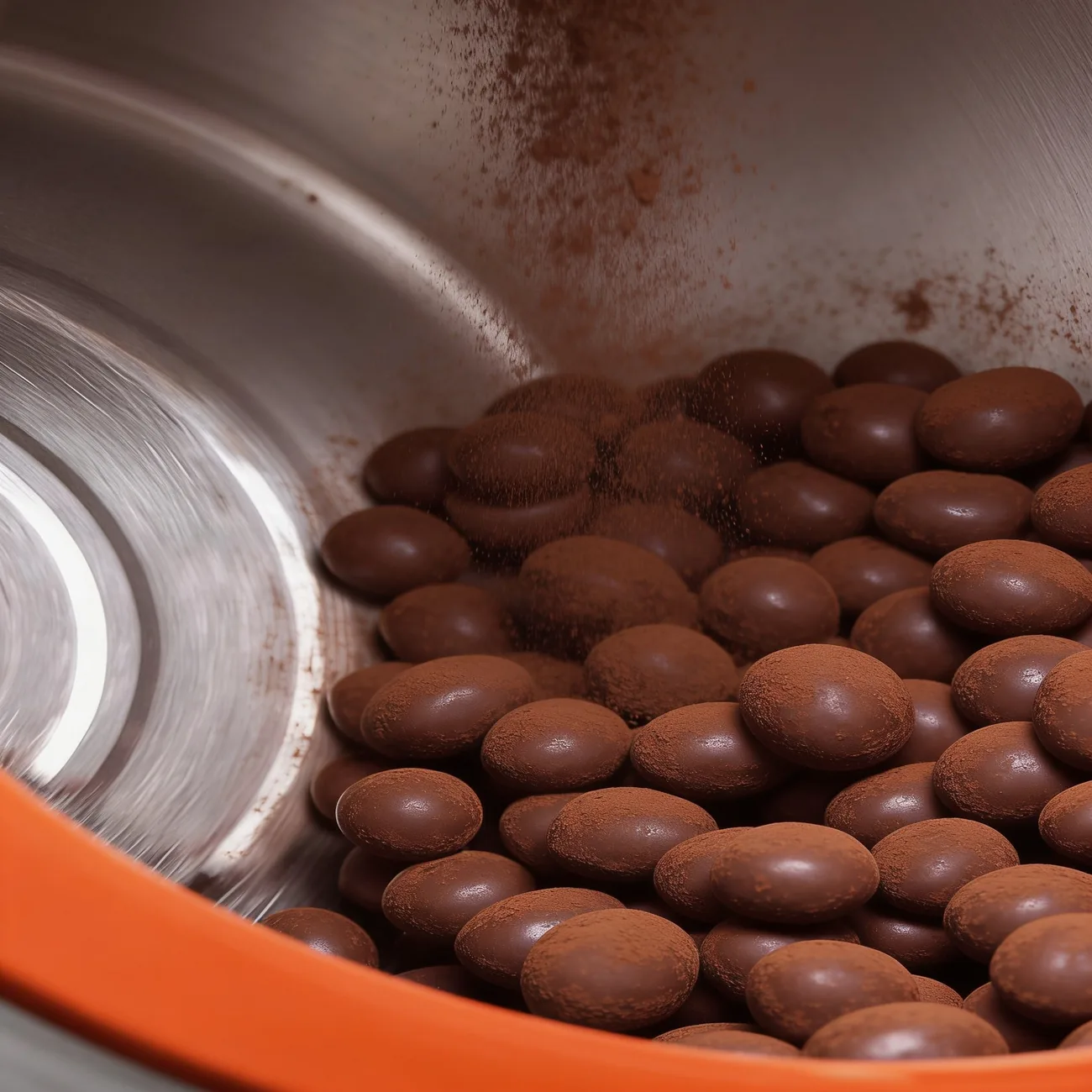
You can run a perfect batch and still lose money on it.
The pan doesn’t warn you. Load one kilo instead of two and every hour of your work earns a third as much: same formula, same selling price. Buy in kilo bags instead of sacks and 21% of your margin goes with them.
This e-book gives you the full technique (center, sealing, layers, crystallization and finish) and the costing that tells you, before you load the pan, whether the batch will make money.
The multiplier only the pan gives you
One kilo of almonds in. 3.47 kilos out. And you sell all of it.
In the pan, every gram of couverture and every gram of finish leaves as sellable weight with a price on it.
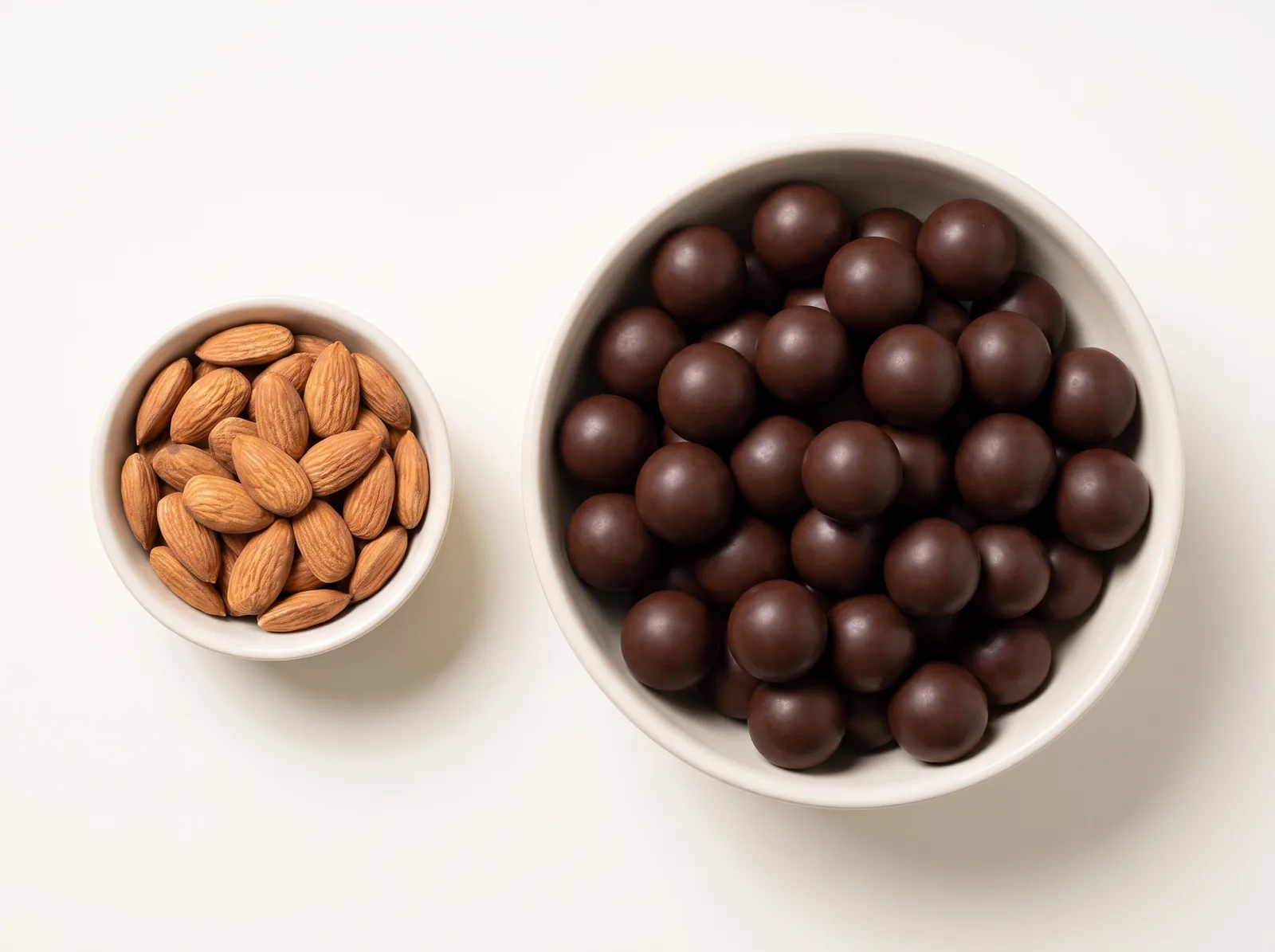
Every kilo of center leaves the pan as 3.47 kilos of product you sell. In a filled bonbon, the shell is a cost. In the pan, the coating is product you sell. And a sealed pouch travels where a bonbon can’t.
12 formulas, one system.
Six panning families, one method underneath: choose the center, seal it, build the coat, fix the finish. Change the center and you have a new product.
Almond, Cocoa & Spices
Nut
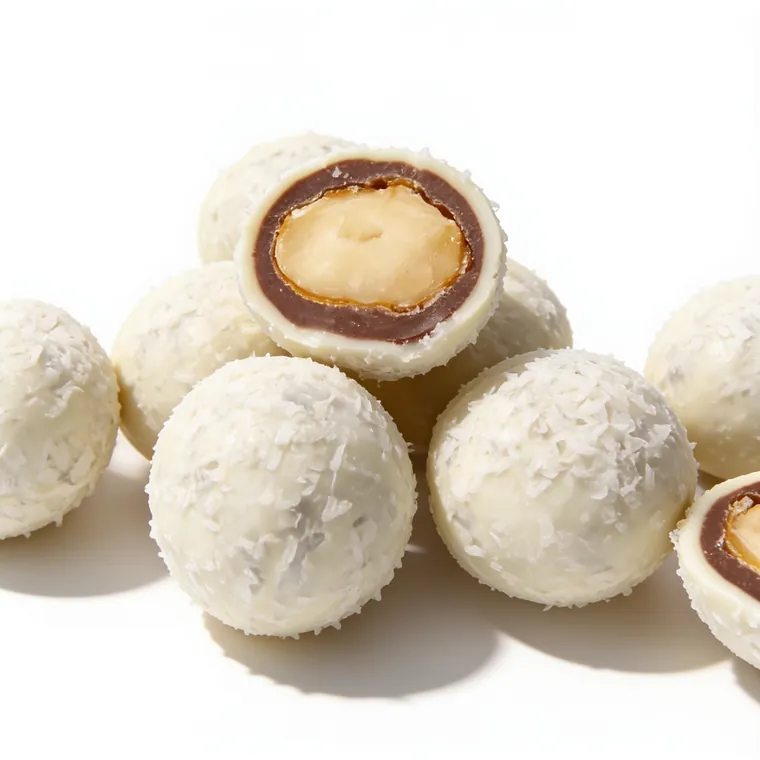
Macadamia, Milk Chocolate & Coconut
Nut
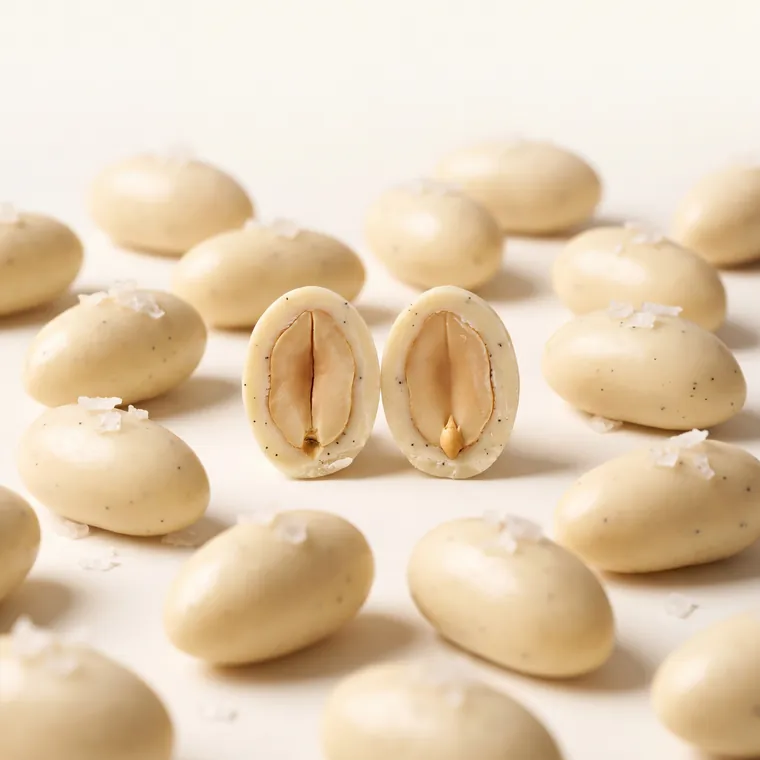
Peanut, Vanilla & Fleur de Sel
Nut
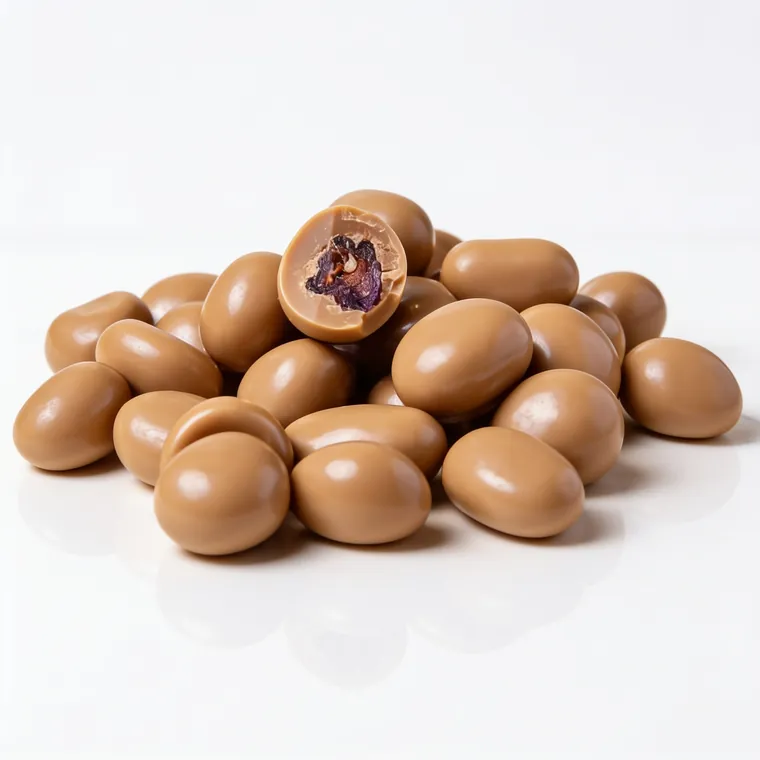
Raisin & Caramelized Chocolate
Sealed center
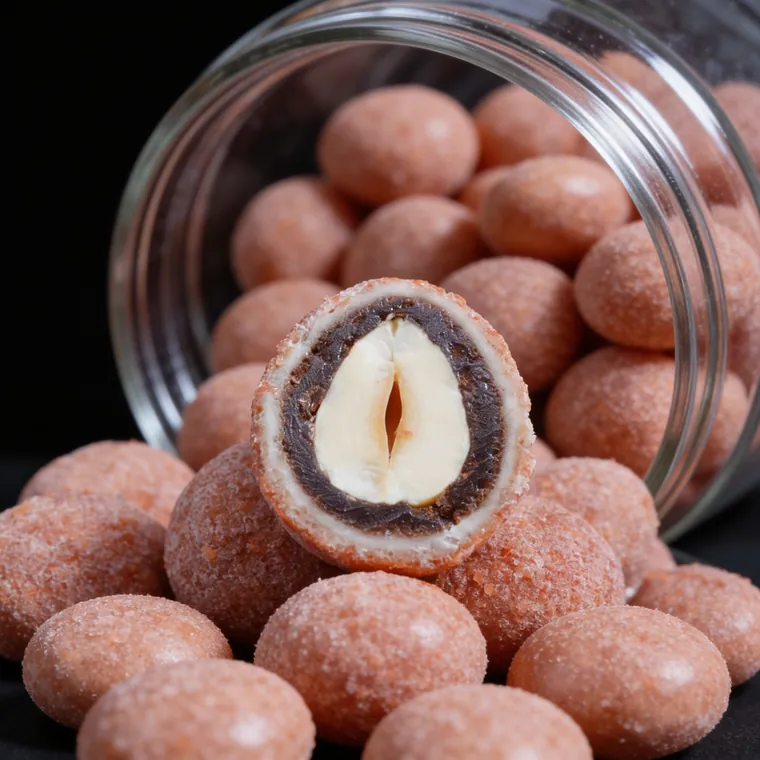
Candied Hazelnut & Colored Sanding Sugar
Sugar-panned
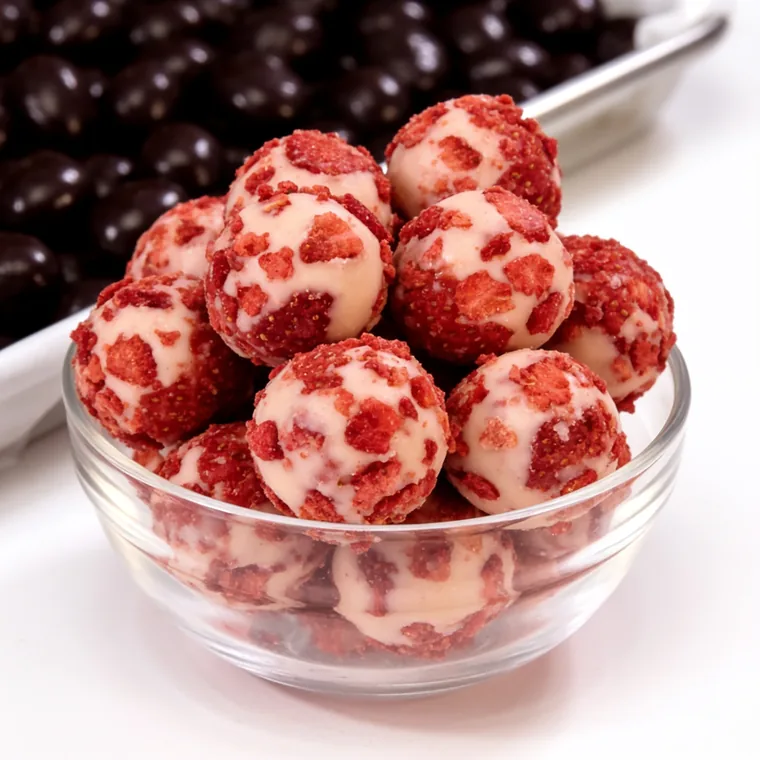
Two-Tone Hazelnut & Strawberry (hygroscopic freeze-dried finish)
Nut
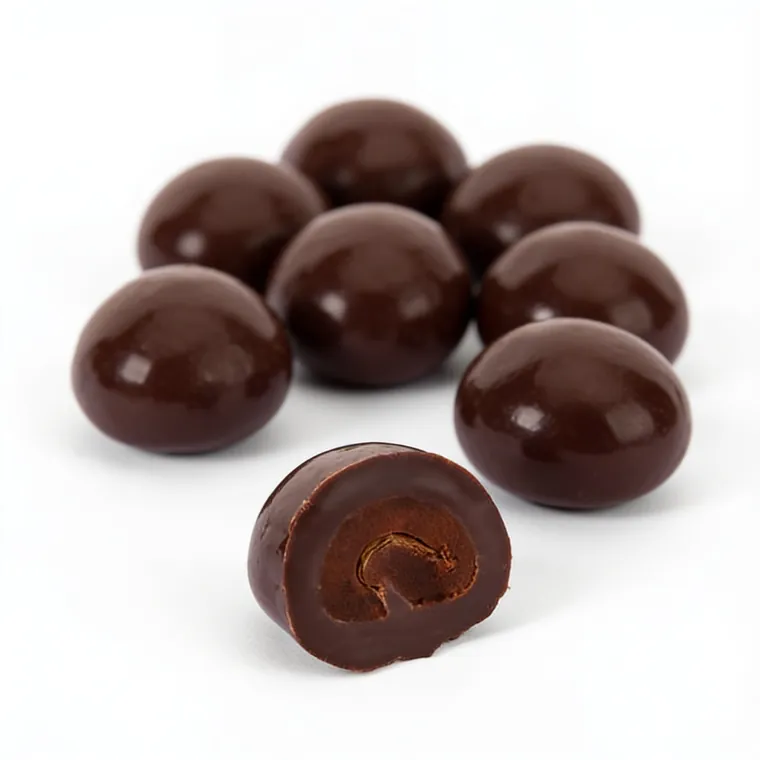
Coffee Bean & Dark Chocolate
Nut
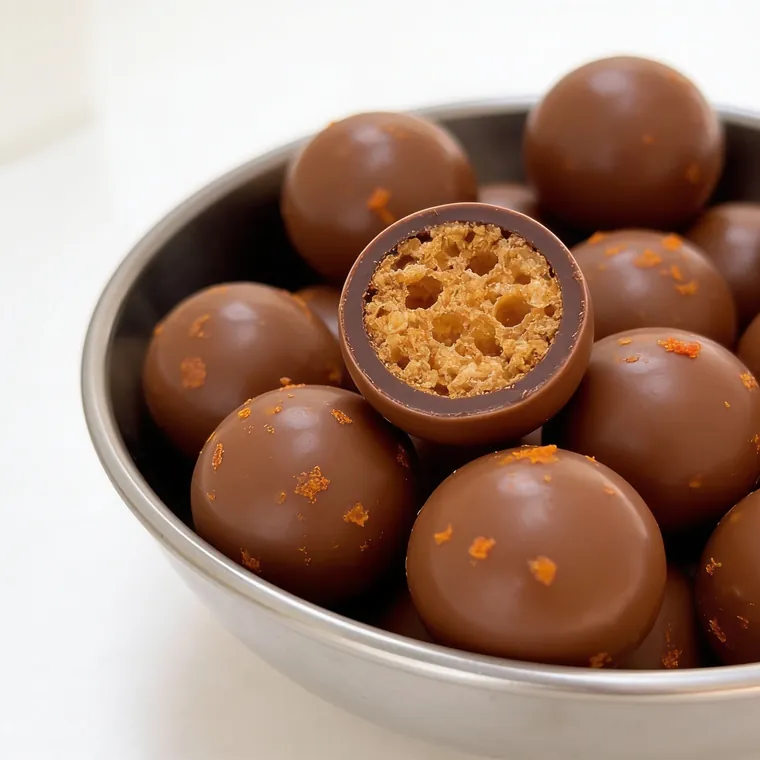
Rice Pearls, Milk & Orange (hygroscopic freeze-dried finish)
Cereal & crunch
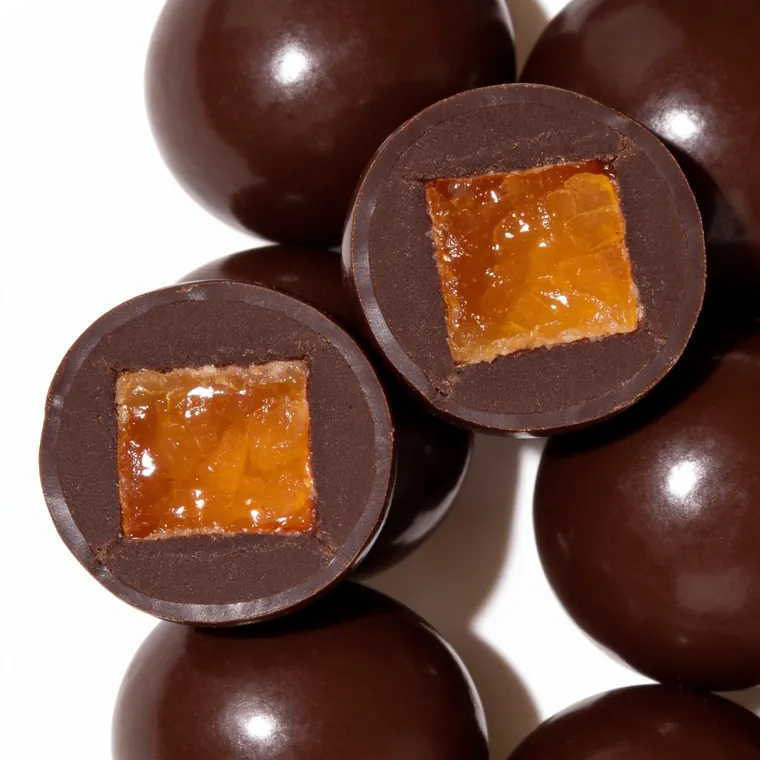
Candied Ginger & Dark Chocolate
Sealed center
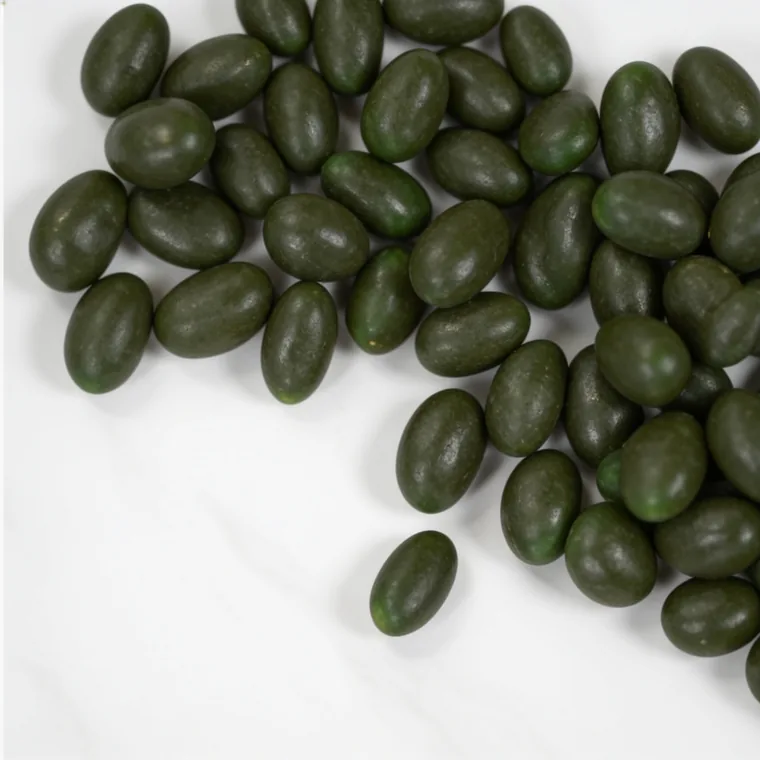
Pistachio Gianduja & Fleur de Sel
Nut

Salted Corn, Dark Chocolate & Golden Flakes
Signature center
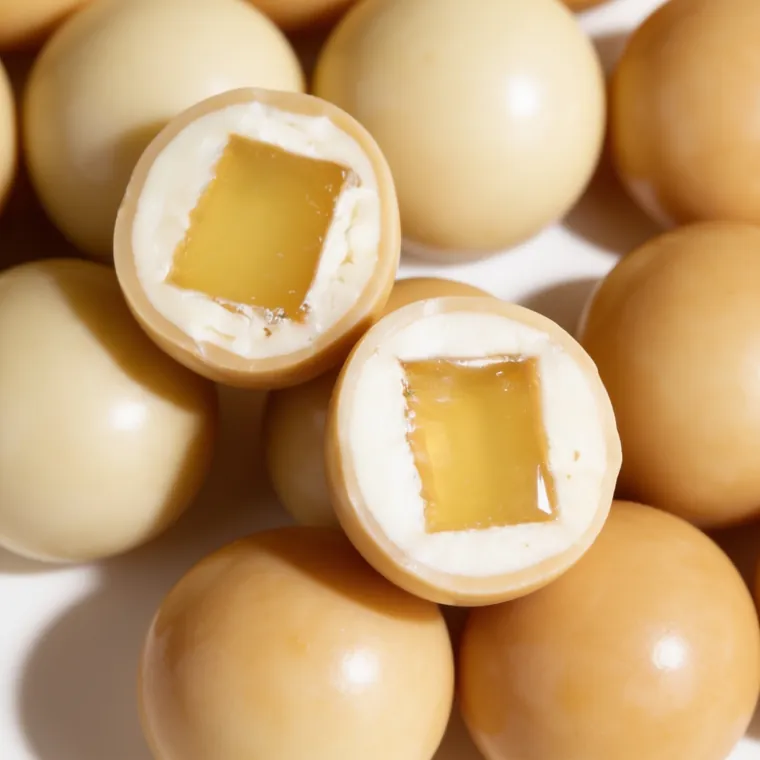
Lemon Pâte de Fruit & Pine Nut Gianduja
Sealed center
Every formula sheet in the book carries its own trial target, which is a target and not a declared shelf life. * Freeze-dried finish: hygroscopic, needs humidity control and barrier packaging.
And every one is designed layer by layer.
Cut one in half and every decision is visible: the seal that keeps the center’s moisture out of the coating, the layers that give the bite, the finish that sets the gloss.
Swipe to see all four →
From the mixer you already own to a profitable line of panned chocolates.
Inside is the complete method: the center types and the layer-by-layer technique, plus the 12 formulas with their costing sheets, to the cent. And the equipment plan: what to start testing with (an attachment for your stand mixer), how many kilos it takes to pay for itself, and when to step up to a professional panning drum. All of it in 173 pages.
- complete costing sheets, to the gram and the cent
- 12 complete costing sheets, to the gram and the cent
- complete formula sheets, photographed and costed
- 12 complete formula sheets, photographed and costed
- AI master prompts: each one returns a 6–13 page technical dossier
- 8 AI master prompts: each one returns a 6–13 page technical dossier
- printable bench templates: batch, costing and pre-launch
- 3 printable bench templates: batch, costing and pre-launch
Center
Choose and prepare the core, including the delicate centers you have to seal first.
Coat
Sealing, layers, crystallization, temperature, humidity and finish. This decides whether the piece holds for months.
Cost
Weigh the real yield, time the active minutes, cost the batch and set a price that still leaves you margin where you sell.
Nine chapters. The seventh is the one you’ll keep coming back to.
What a panned piece is, layer by layer, and how the pan moves.
The equipment decision in four archetypes, the instruments that matter, and the room climate.
The four core families, the six product families, and the barrier rule that keeps a center intact.
The four routes: sugar panning, caramelizing, gumming and dry protection, plus soft centers.
Choosing couverture, the addition cycle, the signals to add again, finishes and polishing.
The defect table, packaging matched to risk, and the shelf-life validation protocol.
The money chapter: the twelve costing sheets, how much sellable product each kilo yields, how much more margin a bigger batch leaves, the minimum price you can afford to sell at, how many kilos it takes for the equipment to pay for itself, and a 30-day plan.
Complete formula sheets with their metrics, allergens and a why it works.
The cheat-sheet of all 12 formulas, the eight mistakes, three printable templates and the digital resources.
Four pages of the finished book.
These are the actual pages, exactly as they land in your inbox.
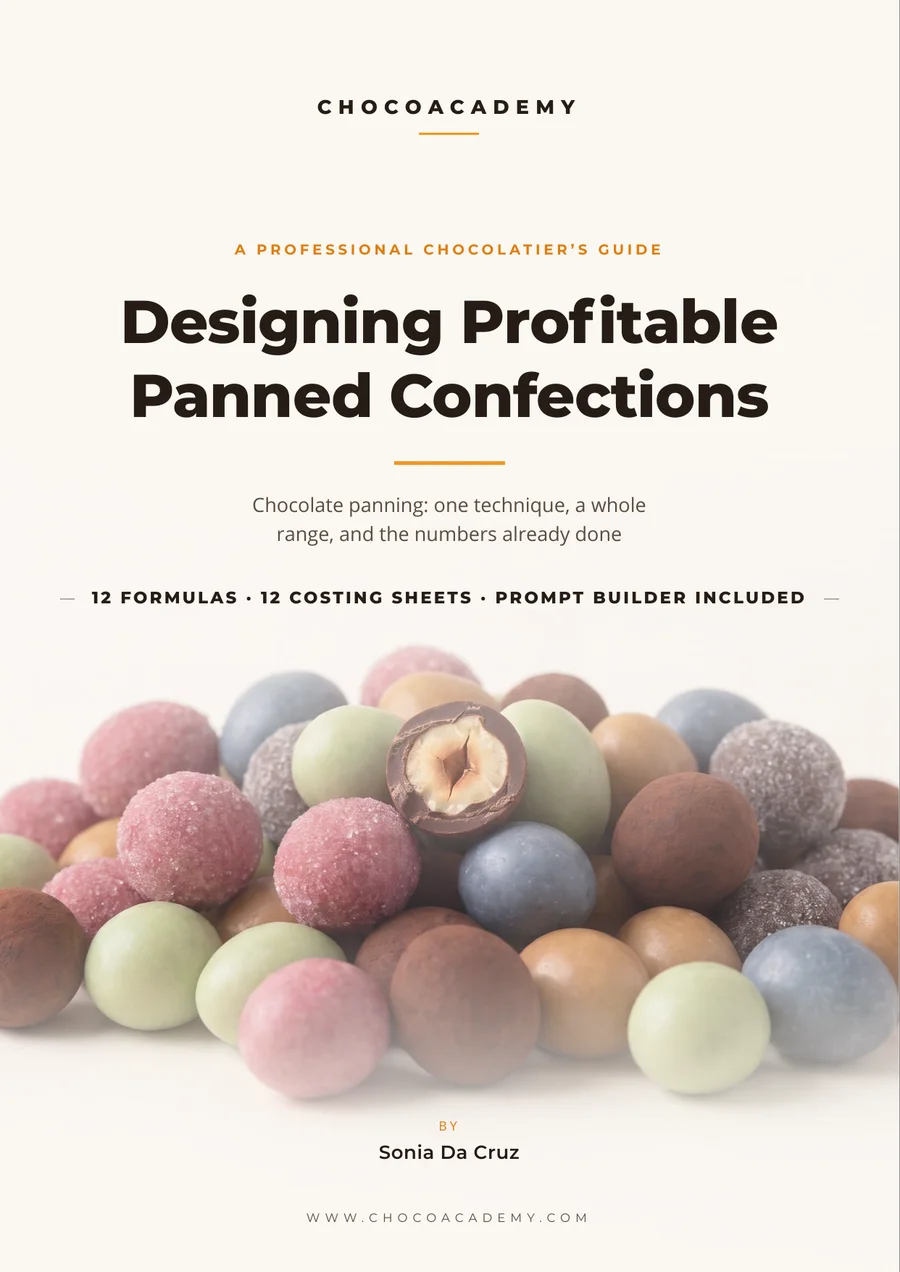
The cover · p. 1 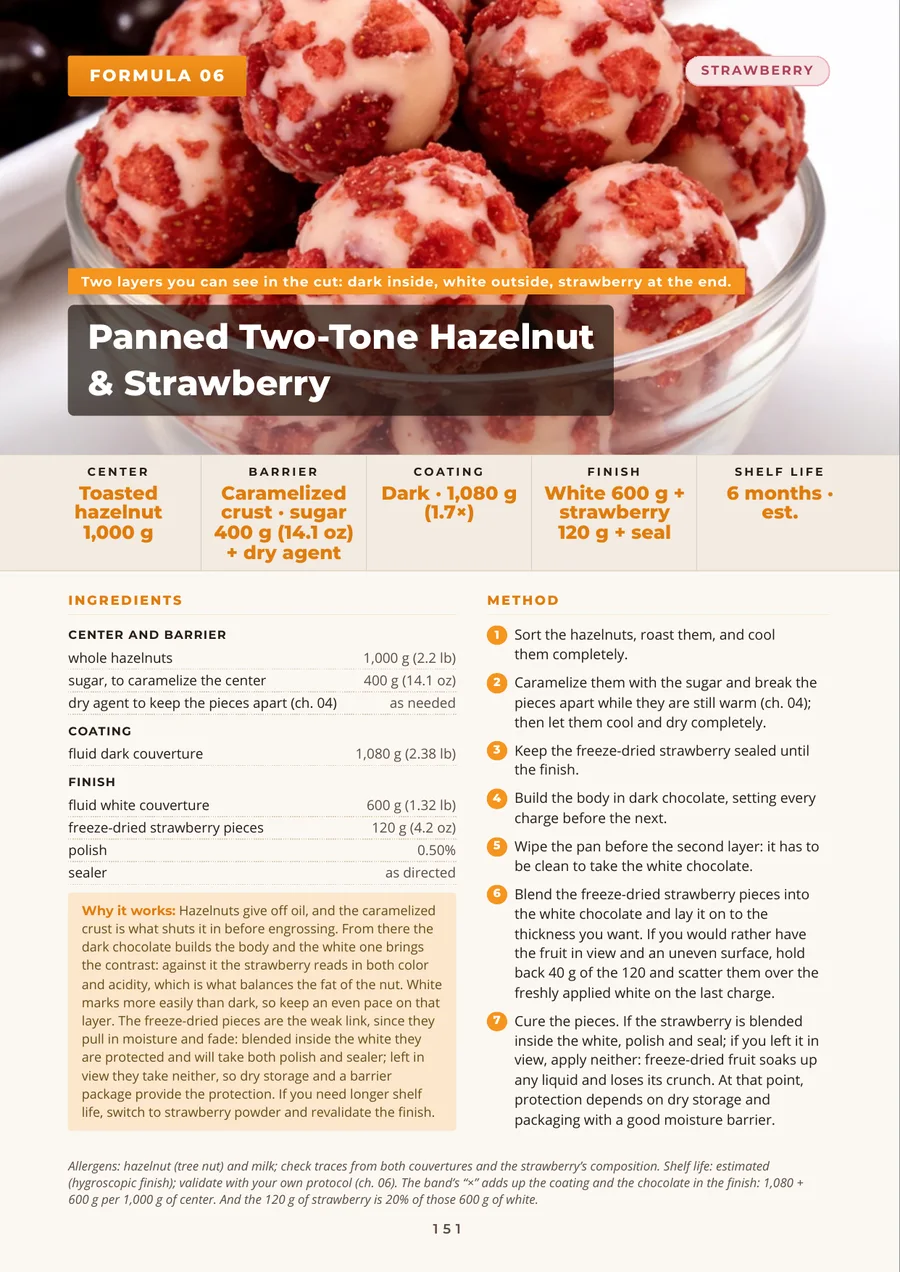
A formula, in full · p. 151 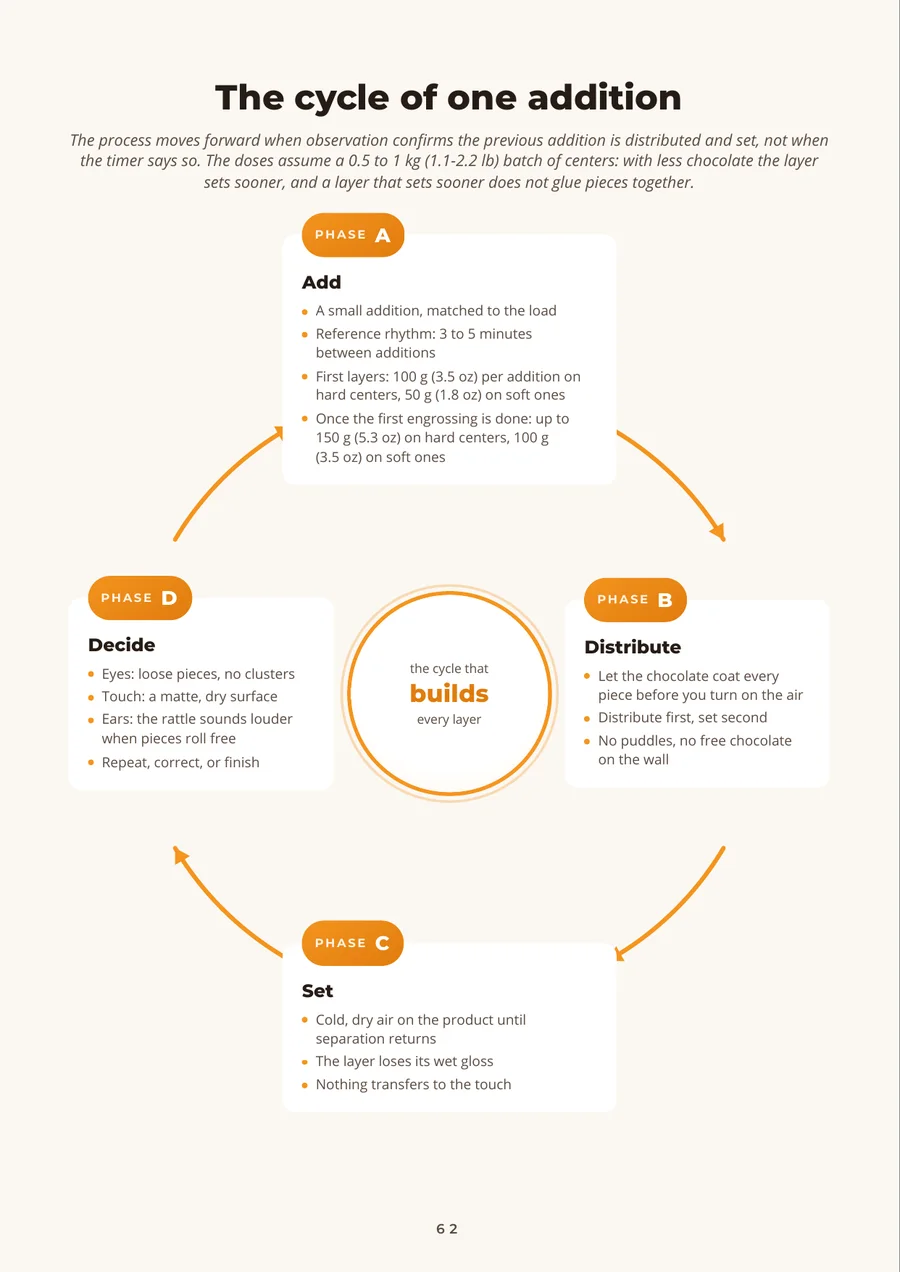
How to read the pan · p. 62 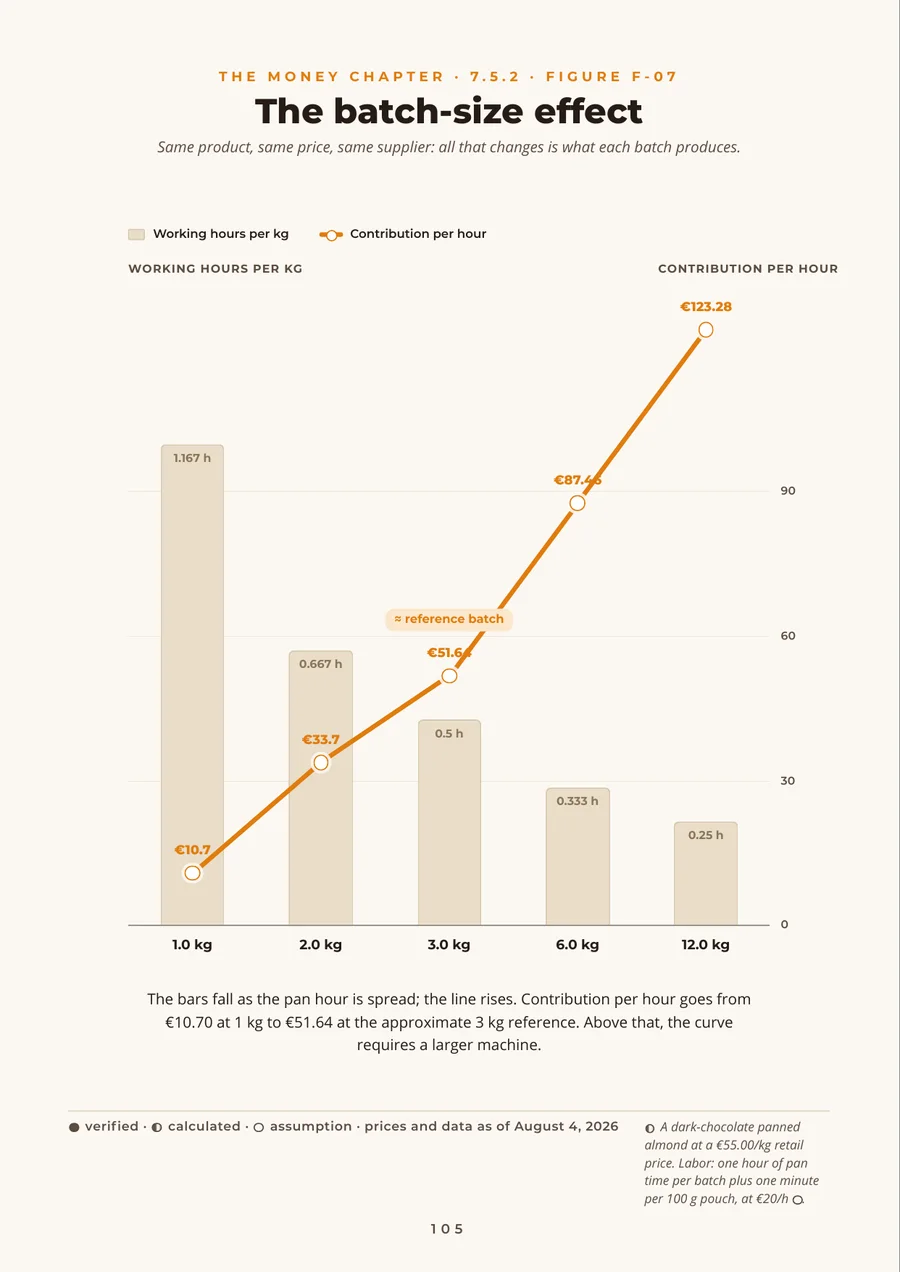
The batch effect · p. 105
IncludedThe AI prompt pack
What if 12 formulas aren’t enough? The prompts help you build the ones that don’t exist yet.
The book gives you 12 formulas costed to the cent. The prompts are for building the next ones. Write one line and get a 6–13 page technical dossier: the formulation, the phase-by-phase process and the costing with every calculation shown, so you can verify it.
The book teaches you the method. The prompts apply it to every idea you have, with your prices and your equipment. The book is finite; the prompts are not.
They are an honest shortcut, too: every prompt carries the book's criteria inside, so you can start formulating and costing from day one, and read the 173 pages at your own pace.
Asking ChatGPT for a recipe
What you get on your own
- A generic five-line answer and a formula that doesn’t add up
- No mass balance: it doesn’t know what the batch yields
- No layer sequence, dosing or crystallization timings
- Ingredients by eye: no gram table, no percentages
- No cost, no price, no margin
- No warnings about moisture, sticking, bloom or loss of crunch
- A result you can’t take to production
Using the prompts
What the instructions return
- A 6–13 page technical dossier for every idea you formulate
- A phase-by-phase process with doses, temperatures, rpm and the exit signal of each phase
- Mass balance: theoretical mass, process loss, sellable weight and the multiplier
- A 1,000 g base formula with ingredient, grams, % and function
- The full costing sheet with every calculation shown, so you can verify it with your numbers
- Every figure tagged with its origin: your data, calculated, or a model assumption
- A risk table with more than six documented scenarios
- Two variants: one bolder, one more stable
A real slice of one output · idea: “toasted hazelnut with milk chocolate and cocoa”
Phase 1 · Center prep: controlled roast, air-friction skinning and full cool-down · 1,000 g · 30 min
Phase 4 · First coat: pre-crystallized couverture over the dry gum · 60 g · chocolate at 29.5 °C
Phase 5 · Build-up: 14 increasing loads, from 100 to 160 g · ≈1,940 g in total
Nine phases, each with its dose, its temperatures, its rpm, its time and its exit signal: how you know you can move to the next one. That is what separates a recipe from a method.
Three steps, about a minute.
Three hard rules are written into every prompt.
It never declares a shelf life
Not even if you ask. It gives you trial targets and reminds you that the date is set by your validation, not by an AI.
It never promises margins
It works out your contribution with your numbers and flags every assumption as an assumption.
Every additive, with its E number
And with the instruction to check the legal dose in your market before you use it.
Every figure comes tagged with its origin, so you can check it. The final call is always yours.
They work with ChatGPT, Gemini and Claude, free tiers included. Copy, paste, read the answer.
Get instant access for 27€Same drum, same technique: from €19.47 to €65.69 contribution per kilo.
The twelve recipe-book formulas, costed to the cent in chapter 07 with labor charged in. Contribution is what each kilo sold leaves you after ingredients, packaging and your hours. And what separates the first row from the last is not your technique: it is the product you chose to make.
| Product | To make €/kg | Retail (VAT in) €/kg | Contribution €/kg |
|---|---|---|---|
| Salted Corn, Dark Chocolate & Golden Flakes | 25.07 | 50.00 | 19.4743.7% |
| Peanut, Vanilla & Fleur de Sel | 22.47 | 45.00 | 17.6244.0% |
| Two-Tone Hazelnut & Strawberry | 27.24 | 55.00 | 21.7644.4% |
| Candied Ginger & Dark Chocolate | 24.02 | 50.00 | 20.5246.1% |
| Keeps half or more of the revenue as contribution. Candied Hazelnut & Colored Sanding Sugar | 23.67 | 55.00 | 25.3351.7% |
| Keeps half or more of the revenue as contribution. Rice Pearls, Milk & Orange | 28.94 | 70.00 | 33.4353.6% |
| Keeps half or more of the revenue as contribution. Macadamia, Milk Chocolate & Coconut | 24.50 | 60.00 | 28.9554.2% |
| Keeps half or more of the revenue as contribution. Almond, Cocoa & Spices | 22.31 | 55.00 | 26.6954.5% |
| Keeps half or more of the revenue as contribution. Coffee Bean & Dark Chocolate | 25.54 | 65.00 | 32.3755.9% |
| Keeps half or more of the revenue as contribution. Raisin & Caramelized Chocolate | 26.29 | 70.00 | 36.0757.8% |
| Keeps half or more of the revenue as contribution. Lemon Pâte de Fruit & Pine Nut Gianduja | 25.66 | 70.00 | 36.7058.9% |
| Keeps half or more of the revenue as contribution. Pistachio Gianduja & Fleur de Sel | 32.31 | 110.00 | 65.6967.0% |
Three of the twelve: the floor, the middle and the top. The other nine are in the book.
Salted Corn, Dark Chocolate & Golden Flakes
- Cost
- 25.07 €/kg
- Retail price (VAT in)
- 50.00 €/kg
- Contribution
- 19.47 €/kg · 43.7%
Almond, Cocoa & Spices
Keeps half or more of the revenue as contribution
- Cost
- 22.31 €/kg
- Retail price (VAT in)
- 55.00 €/kg
- Contribution
- 26.69 €/kg · 54.5%
Pistachio Gianduja & Fleur de Sel
Keeps half or more of the revenue as contribution
- Cost
- 32.31 €/kg
- Retail price (VAT in)
- 110.00 €/kg
- Contribution
- 65.69 €/kg · 67.0%
A positive costing sheet can be losing you money.
The book shows it with an example. At €30 a kilo, your contribution is €4.42: positive and presentable. And you still lose €1.72 on every kilo once your fixed costs come in. Chapter 07 follows the money all the way down (rent, marketing, fees and tax) so you see it coming.
The variable that moves your margin most
Run the numbers with your own prices.
The price you charge moves your margin more than any ingredient price does. This is the costing model from chapter 07, running here. Change the center, the batch size and what you charge per kilo. Nothing is sent anywhere.
- Your selling price+36.7%
- Your hourly cost-6.8%
- The batch minutes-6.8%
- The couverture price-5.5%
- The nut price-2.4%
The price you charge moves your margin fifteen times more than the price you pay for almonds (sensitivity analysis from chapter 07).
Same formula, same price, same pan. The only thing that changes is how much you load. In the book’s model, what you earn per hour of work goes from €10.70 with a one-kilo batch to €33.73 with two kilos, and €51.64 with three. At two batches a week, the book itself projects €8,522 of contribution a year in 146 hours. Move the slider and your own number does the same.
Your numbers
Advanced
Your business
- Margin per hour
- 42.07 €/h
- Full cost
- 25.67 €/kg
- Selling price
- 55.00 €/kg
- Contribution per kg
- 23.33 €/kg
- Kg to payback
- 14.9 kg
- Pouches to payback
- 150
The book comes with all twelve costing sheets already worked out, one per formula. When you need a thirteenth, the prompts help you build it with its costing done.
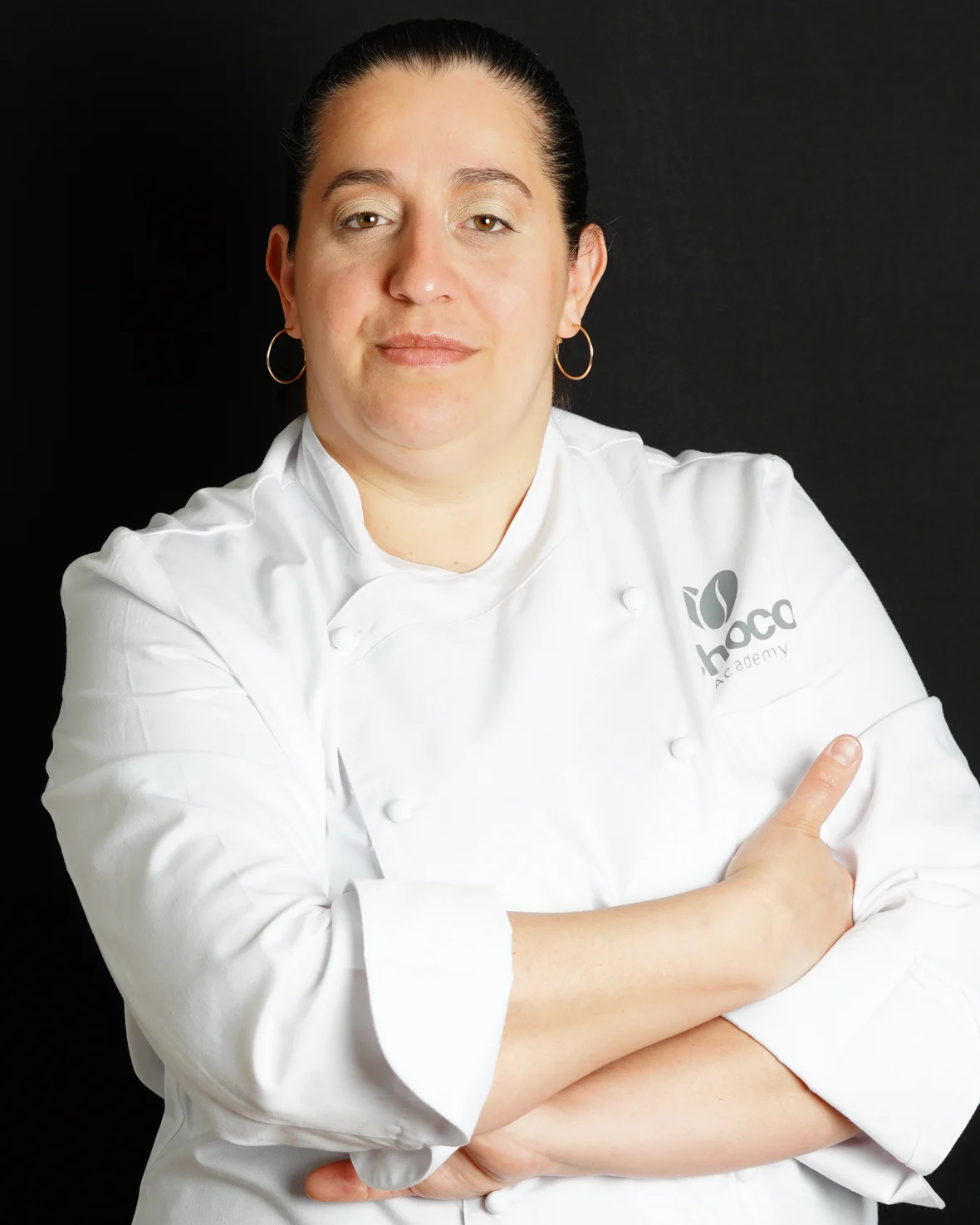
Meet your instructor
I made beautiful batches that earned nothing. Now I know which ones pay before I switch the pan on.
I’m Sonia Da Cruz: electronics engineer by profession, chocolatier at heart. I grew up in the back room of my parents’ pastry shop, surrounded by molds, piping bags and the smell of cacao. That’s where it all began.
For six years I ran a chocolate factory and took it from artisanal to an industrial-grade bonbon line. Panning came in to solve a very specific problem: I needed products I could make ahead of the season and that travelled well.
Today I train chocolatiers in more than 50 countries. This e-book is that method (center, coat, cost) organized and written for your bench.
The twelve costing sheets are the example. The method to build your own, with your prices and your minutes, is the product.
Everything for 27€
The complete e-book and the AI prompts, in one download. Pay once and it stays yours.
The e-book, 173 pages
9 chapters and 12 formulas, with a full chapter on costing and pricing.
Twelve complete costing sheets
The twelve recipe-book formulas costed to the gram, labor charged in, each with its contribution per kilo. Plus the section that rebuilds them in your currency.
AI prompts for panned chocolate
Six build the formula, one runs the numbers, one rescues the batch. Write one line and get back a 6–13 page technical dossier with its costing sheet. They help you create the formulas that are not in the book.
Templates, updates, lifetime access
The batch sheet, the master costing sheet and the pre-launch checklist, ready to print and photocopy for your workshop, plus the 12-formula cheat sheet. Every revision lands in your library at no extra cost.
One-time payment. Instant, lifetime access.
The starter attachment costs €348.58 ex-VAT. This book is about 8% of that, and it tells you whether it’s worth buying.
In your inbox in under a minute: the 173-page PDF, the 8 prompts and the three printable templates.
Secure card payment via Stripe.
You saw the real table of contents, four pages of the finished PDF and twelve costing sheets with their margins before anyone asked you for money. That is what we offer instead of a guarantee. And this is not our first book: our fillings e-book sold over 1,000 copies in its first month.
- Instant download
- One-time payment, no subscription
- Works with any AI
- Lifetime access + free updates
Questions, answered.
The ones that come up most before buying.
The 173-page PDF: 12 formulas, twelve full costing sheets, 8 AI prompts and three printable templates. In your inbox at checkout; check spam. There are recipes, but the core is the method: sealing, layering and whether the batch pays.
To read it, no; to produce, yes. The attachment sells for around $524.90–549 in the United States and €348.58 ex-VAT in Europe. It mounts on certain KitchenAid and Kenwood models depending on version: check yours. Plus sealer, thermometer, trays and packaging.
About 13 kg sold (4 batches, some 130 pouches) if you already own a mixer, on the book’s scenario margins. That pays back the equipment itself, before marketing, fees, shipping, rent and tax.
No. The prompts are written. Paste them into ChatGPT, Gemini or Claude, free tiers included, and get formulation and costing back. They use your prices, and when data is missing they ask instead of inventing it. Check the arithmetic and weigh your batch before you price.
Per workshop hour and per euro invested, yes. Per kilo, no: a filled bonbon leaves more margin per kilo; both costing sheets are in the book, side by side. On net revenue with labor charged in: 53% for panned chocolate against 44% for the filled bonbon, in under a quarter of the hours.
Stable storage, not a display case: a sealed pouch asks for a 16–22 °C shelf, with 22 as the ceiling; a filled bonbon needs a 14–18 °C cabinet. Six months at room temperature is the trade’s standard declaration for dry centers, with fresh nuts, intact coating and barrier packaging. Not a guarantee: the book’s protocol makes you validate your own date.
If you already temper chocolate, you are ready. The manufacturer states the equipment requires the basic techniques of confectionery.
Yes. If your business already operates under a food-safety registration, panned chocolate fits into what you already make: check the labeling and allergen rules your country requires and you are set. The book tells you what to review; it does not replace your advisor.
The method, as is; the prices, as a reference. Swap in your own supplier costs and every sheet rebuilds the same way: the calculator above does it with your numbers.
27€ · instant download · lifetime access